
Surah Mulk and Surah Insan: The Test of Man and the Reminder
Both describe human life as a test and mention hearing and seeing. Both speak of two groups, of provision or food and water, and of a coming Day. Al-Mulk frames these ideas through dominion and signs; Al-Insan frames them through the creation of man and a long contrast between the disbelievers and the righteous.
Last reviewed:
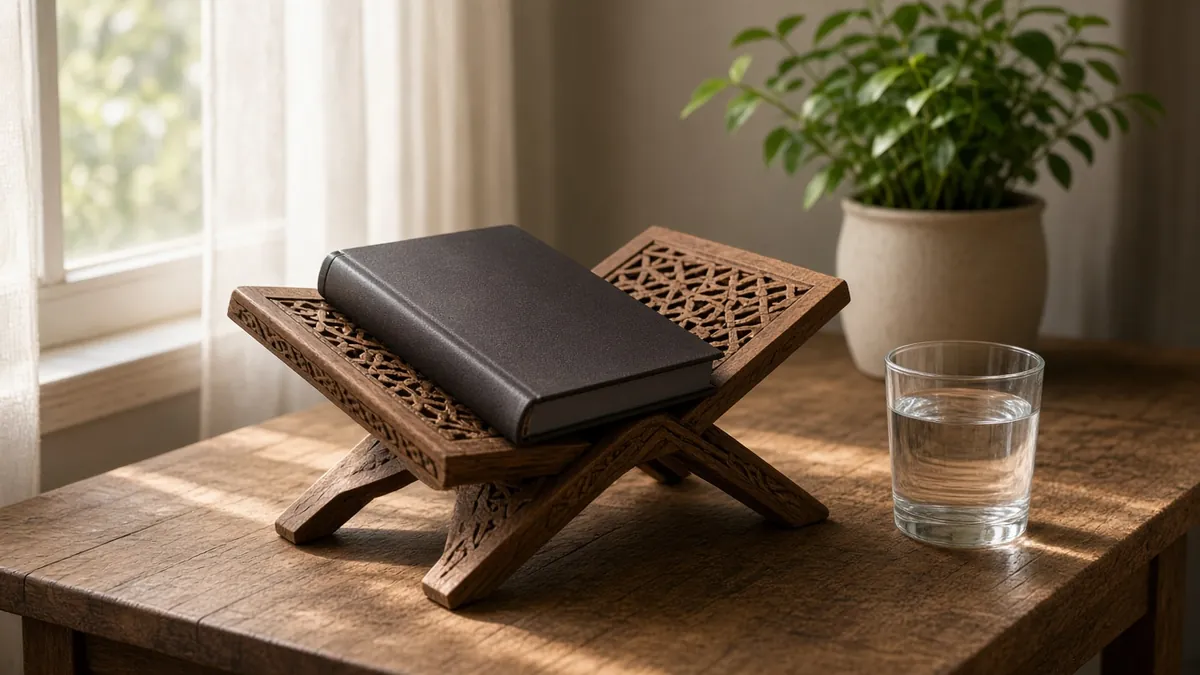
Surah Mulk and Surah Insan both speak about why human beings were created and what they do with hearing, sight and a coming Day. Surah Al-Mulk (67) says Allah “created death and life to test you [as to] which of you is best in deed.” Surah Al-Insan (76), “The Man,” also called Ad-Dahr, opens by asking whether a period of time has come upon man when he was not a thing mentioned, then says he was created “that We may try him.” This page compares the two surahs using the Sahih International translation as published on Quran.com.
This is a study of meaning and themes only. It quotes the Qur’an and does not discuss virtues, rulings or hadith. To read Surah Mulk in full, see read Surah Mulk online. Both surahs belong to Juz Tabarak.
The two surahs at a glance
| Surah Al-Mulk | Surah Al-Insan | |
|---|---|---|
| Number | 67 | 76 |
| Name means | The Sovereignty (Dominion) | The Man |
| Verses | 30 | 31 |
| Classification on Quran.com | Meccan | Medinan |
| Juz | 29 (Juz Tabarak) | 29 (Juz Tabarak) |
| Mushaf pages | 562–564 | 578–580 |
| Form | Questions, signs in creation and warnings | Creation of man, two groups and scenes of reward and loss |
Al-Insan comes later in the same juz, after Al-Muzzammil and other companions. If you are reading neighboring comparisons, Surah Mulk and Surah Muzzammil shares the reminder line that also appears in 76:29. Surah Mulk and Surah Naba looks at the next juz.
How each surah opens
Al-Mulk begins with dominion:
"Blessed is He in whose hand is dominion, and He is over all things competent -" (67:1) "[He] who created death and life to test you [as to] which of you is best in deed - and He is the Exalted in Might, the Forgiving -" (67:2)
Al-Insan begins with man himself:
"Has there [not] come upon man a period of time when he was not a thing [even] mentioned?" (76:1) "Indeed, We created man from a sperm-drop mixture that We may try him; and We made him hearing and seeing." (76:2) "Indeed, We guided him to the way, be he grateful or be he ungrateful." (76:3)
Mulk starts from the One who holds dominion and then names the test. Insan starts from man’s not having been mentioned, then names the test and the gifts of hearing and seeing. The shared idea is trying or testing a human being who did not create himself. For Mulk’s test verse, see Surah Mulk verse 2.
Theme 1: Hearing, seeing and thanks
Al-Insan says man was “made … hearing and seeing” (76:2) and then “guided … to the way, be he grateful or be he ungrateful” (76:3).
Al-Mulk returns to the same faculties near the end:
"Say, 'It is He who has produced you and made for you hearing and vision and hearts [i.e., intellect]; little are you grateful.'" (67:23)
Hearing and vision appear in both. Mulk adds hearts and remarks that people are “little … grateful.” Insan splits the response into two paths, grateful or ungrateful, right at the opening. The vocabulary of thanks (grateful / ungrateful) in 76:3 sits beside “little are you grateful” in 67:23. See Surah Mulk verse 23.
Theme 2: The test
The purpose language is very close.
- Al-Mulk: “created death and life to test you [as to] which of you is best in deed” (67:2)
- Al-Insan: “We created man from a sperm-drop mixture that We may try him” (76:2)
Mulk names death and life as the field of the test and points to deeds. Insan names the material of creation (a sperm-drop mixture) and then, in the next verse, guidance to a way. Neither verse is expanded here into a ruling about how the test must be lived. The comparison is only that both surahs say man was made in order to be tried.
Theme 3: Two groups
Al-Insan states the split early:
"Indeed, We have prepared for the disbelievers chains and shackles and a blaze." (76:4)
It then turns at length to “the righteous” who “drink from a cup [of wine] whose mixture is of Kāfūr” (76:5), who “fulfill [their] vows and fear a Day whose evil will be widespread” (76:7), and who “give food in spite of love for it to the needy, the orphan, and the captive” (76:8), saying they feed “only for the face [i.e., approval] of Allāh” (76:9). The passage continues through gardens, silk, shade and a purifying drink (76:11–22).
Al-Mulk draws the same kind of line without the long garden scene. Those who disbelieved have “the punishment of Hell” (67:6–11), and they wish they had listened or reasoned (67:10). On the other side:
"Indeed, those who fear their Lord unseen will have forgiveness and great reward." (67:12)
Mulk also asks which walker is better guided: the one “fallen on his face” or the one who “walks erect on a straight path” (67:22). Insan’s grateful or ungrateful pair (76:3) belongs with that question. For 67:12 and 67:22, see verse 12 and verse 22.
This page quotes the feeding verses as part of how Insan describes “the righteous.” It does not add extra claims about reward.
Theme 4: Provision, food and water
Al-Mulk speaks of provision on the earth and of water that could be taken away:
"It is He who made the earth tame for you - so walk among its slopes and eat of His provision - and to Him is the resurrection." (67:15) "Or who is it that could provide for you if He withheld His provision?" (67:21) "Say, 'Have you considered: if your water was to become sunken [into the earth], then who could bring you flowing water?'" (67:30)
Al-Insan speaks of food given away (76:8–9) and of drinks in the garden: a cup mixed with kāfūr (76:5), a cup mixed with ginger (76:17), a fountain named Salsabeel (76:18) and “a purifying drink” from their Lord (76:21). The settings differ — this world’s provision and withheld water in Mulk, food given to people in need and drinks in the garden in Insan — but food and water keep returning as signs that life is not self-supplied. See Surah Mulk verse 15 and verse 30.
Theme 5: The Day and dominion
Al-Insan mentions the Day several times: a Day “whose evil will be widespread” (76:7), “a Day austere and distressful” (76:10), and “a grave Day” that some people leave behind while they “love the immediate” (76:27). After the garden description it says:
"And when you look there [in Paradise], you will see pleasure and great dominion." (76:20)
Al-Mulk’s very name is dominion, and its opening verse places that dominion in Allah’s hand (67:1). People ask, “When is this promise?” (67:25), and the answer is that knowledge is with Allah; the warner only warns (67:26). When they see it approaching, faces change (67:27).
So “dominion” appears in both books of the comparison: as Allah’s in 67:1, and as something seen in the garden in 76:20. The Day is expected in both, whether as a promise people question (Mulk) or as a grave Day some people ignore (Insan).
Theme 6: A reminder and a way to take
Al-Insan closes its main argument with a line that also appears in Al-Muzzammil:
"Indeed, this is a reminder, so he who wills may take to his Lord a way." (76:29)
The next two verses add:
"And you do not will except that Allāh wills. Indeed, Allāh is ever Knowing and Wise." (76:30) "He admits whom He wills into His mercy; but the wrongdoers - He has prepared for them a painful punishment." (76:31)
Al-Mulk does not use the sentence “this is a reminder,” but it does describe a warner who had already come (67:8–9) and a messenger who is “only a clear warner” (67:26). Listening or refusing to listen (67:10) is the human side of that reminder. Insan 76:23 says the Qur’an was “sent down … progressively,” and 76:24–26 tell the one addressed to be patient and to mention the name of his Lord morning, evening and at night. The reminder is something sent down and something a person may take.
How the two surahs close
Al-Mulk ends with belief, reliance and the water question (67:29–30). Al-Insan ends with mercy and a painful punishment (76:31), after saying that willing itself does not stand outside Allah’s will (76:30). Both endings keep the last word from being human self-sufficiency: provision can be withheld; a way can be taken; mercy is His to admit people into.
Other lessons drawn only from 67 are gathered in lessons from Surah Mulk.
Al-Qiyamah stands just before Al-Insan in the same juz; Surah Mulk and Surah Qiyamah is the pairing for chapter 75.
Side-by-side verse table
| Theme | Surah Al-Mulk | Surah Al-Insan |
|---|---|---|
| Opening | Dominion; death and life as a test (67:1–2) | Man was not mentioned; created to be tried (76:1–2) |
| Senses | Hearing, vision and hearts; little gratitude (67:23) | Made hearing and seeing; grateful or ungrateful (76:2–3) |
| Two paths | Hell for those who disbelieved; forgiveness for those who fear their Lord unseen (67:6–12) | Chains for disbelievers; a long passage on the righteous (76:4–22) |
| Food and water | Eat of His provision; who could bring flowing water? (67:15, 67:30) | Food given to the needy; drinks in the garden (76:8–9, 76:5, 76:17–21) |
| The Day | When is this promise? When they see it (67:25–27) | A widespread, austere, grave Day (76:7, 76:10, 76:27) |
| Dominion | In His hand (67:1) | Pleasure and great dominion seen in the garden (76:20) |
| Reminder | A warner had come (67:8–9, 67:26) | This is a reminder; take a way to your Lord (76:29) |
Sources: Quranic text verified against Uthmani script (Hafs an Asim). Hadith cross-referenced with Sunnah.com and Quran.com. See our editorial policy.