
Surah Mulk and Surah Naba: Signs in Creation and the Day to Come
Surah An-Naba (78) begins with people disagreeing about "the great news", lists signs in creation such as the earth, mountains, sleep, the sky and rain, and then describes the Day of Judgement as "an appointed time" (78:17).
Last reviewed:
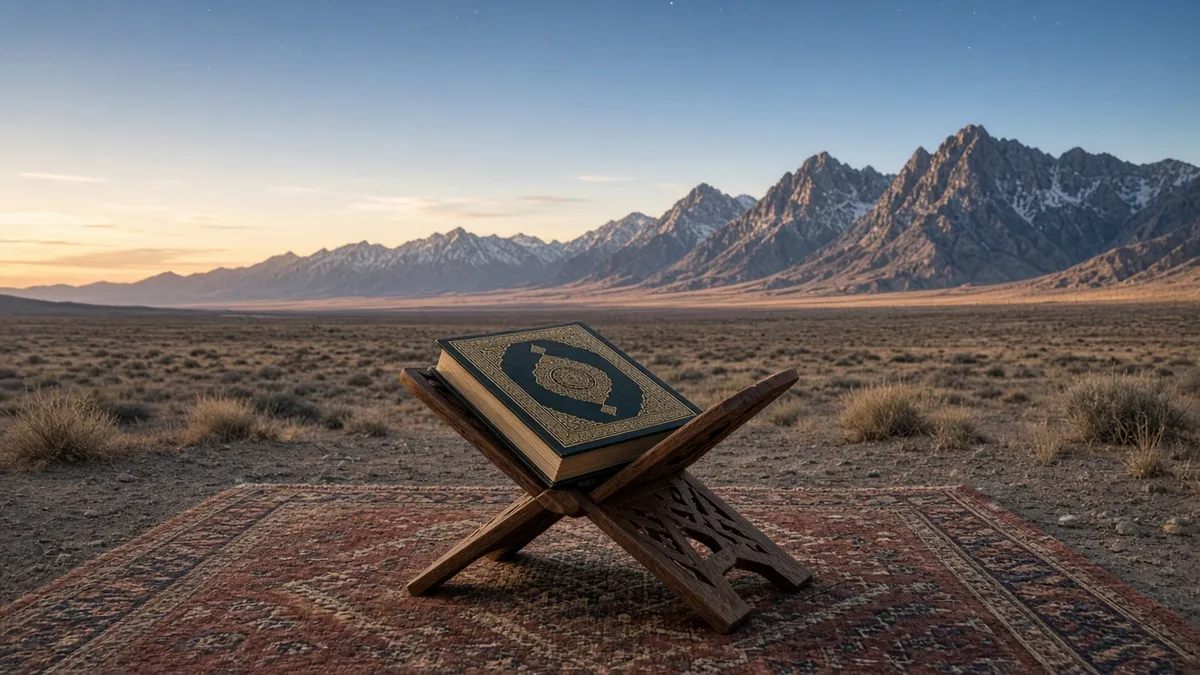
Surah Mulk and Surah Naba cover much of the same ground. Both ask the reader to look at the earth, the mountains, the sky and the rain, and both move from those signs to the Day of Judgement. Surah Al-Mulk (67) does it through repeated questions, such as "do you see any breaks?" Surah An-Naba (78) does it through a rapid list of things Allah has made, then a vivid description of the Day. This page compares the two surahs verse by verse, using the Sahih International translation as published on Quran.com.
This is a meaning-and-themes comparison only. It does not discuss virtues, rulings or hadith. For the full text of Surah Mulk, see Surah Mulk in English or read it online.
The two surahs at a glance
| Surah Al-Mulk | Surah An-Naba | |
|---|---|---|
| Number | 67 | 78 |
| Name means | The Dominion | The News (or The Tidings) |
| Verses | 30 | 40 |
| Juz | 29 (first surah of the juz) | 30 (first surah of the juz) |
| Mushaf pages | 562-564 | 582-583 |
| Classification (Quran.com) | Meccan | Meccan |
A neat parallel: each surah opens its juz. Surah Mulk begins Juz 29, often called Juz Tabarak after its first word (see Juz Tabarak), and Surah An-Naba begins Juz 30, often called Juz 'Amma after its first word.
How each surah opens
Surah Al-Mulk opens with a statement about Allah:
"Blessed is He in whose hand is dominion, and He is over all things competent -" (67:1)
Surah An-Naba opens with a question about people:
"About what are they asking one another? About the great news - That over which they are in disagreement." (78:1-3)
Then it answers firmly:
"No! They are going to know. Then, no! They are going to know." (78:4-5)
So Al-Mulk starts with who is in control, and An-Naba starts with a disagreement among people about "the great news." Both openings lead to the same place: the signs that should settle the question.
Theme 1: The earth made for people
Both surahs point to the earth as something made ready for human life.
"It is He who made the earth tame for you - so walk among its slopes and eat of His provision - and to Him is the resurrection." (67:15)
"Have We not made the earth a resting place? And the mountains as stakes?" (78:6-7)
Al-Mulk describes the earth as "tame" and invites people to walk its slopes and eat of His provision. An-Naba calls it "a resting place" and mentions the mountains as stakes. Notice that 67:15 ends with "to Him is the resurrection"; even in a verse about everyday life, Al-Mulk ties the earth to the return to Allah. An-Naba makes the same link later in the surah. For more on this verse, see Surah Mulk verse 15.
Theme 2: The sky and its lamps
Both surahs speak of seven heavens and of lights placed in the sky.
"[And] who created seven heavens in layers. You do not see in the creation of the Most Merciful any inconsistency. So return [your] vision [to the sky]; do you see any breaks?" (67:3)
"And We have certainly beautified the nearest heaven with lamps [i.e., stars]..." (67:5)
"And constructed above you seven strong [heavens]. And made [therein] a burning lamp" (78:12-13)
Al-Mulk invites the reader to look again and again for a flaw (67:3-4) and says the nearest heaven has been beautified with lamps. An-Naba describes the seven heavens as "strong" and mentions "a burning lamp." The language differs, but both surahs use the sky as a sign of order and design that the reader can see with their own eyes. Our verse 3 page looks at that verse in detail.
Theme 3: Water and provision
Water appears in both surahs, but from opposite angles.
"Say, "Have you considered: if your water was to become sunken [into the earth], then who could bring you flowing water?"" (67:30)
"And sent down, from the rain clouds, pouring water. That We may bring forth thereby grain and vegetation. And gardens of entwined growth." (78:14-16)
Al-Mulk ends with a question: what if the water were taken away? An-Naba describes water being given: rain that brings grain, plants and gardens. Read together, the two passages make the same point from both sides: water and the food it brings are provision from Allah. Al-Mulk also asks, "who is it that could provide for you if He withheld His provision?" (67:21). See Surah Mulk verse 30.
Theme 4: The human being
Both surahs turn from the wider world to the reader's own life.
"Say, "It is He who has produced you and made for you hearing and vision and hearts [i.e., intellect]; little are you grateful."" (67:23)
"And We created you in pairs. And made your sleep [a means for] rest And made the night as clothing. And made the day for livelihood." (78:8-11)
Al-Mulk names hearing, vision and hearts, and notes how little gratitude people show. An-Naba describes the rhythm of daily life: pairs, sleep, night and day. In both, the most ordinary parts of life are presented as gifts that point to their Maker.
Theme 5: Knowledge and the record
Al-Mulk emphasizes that nothing is hidden from Allah:
"And conceal your speech or publicize it; indeed, He is Knowing of that within the breasts. Does He who created not know, while He is the Subtle, the Aware?" (67:13-14)
An-Naba says the same about deeds:
"But all things We have enumerated in writing." (78:29)
Theme 6: The Day of Judgement
Both surahs move from signs in creation to the certainty of the Day. In Al-Mulk the movement is gentle and questioning:
"Say, "It is He who has multiplied you throughout the earth, and to Him you will be gathered."" (67:24)
"Say, "The knowledge is only with Allāh, and I am only a clear warner."" (67:26)
In An-Naba, it is direct and detailed:
"Indeed, the Day of Judgement is an appointed time - The Day the Horn is blown and you will come forth in multitudes" (78:17-18)
An-Naba then describes the heaven opening and the mountains becoming "[but] a mirage" (78:19-20). It is a striking reversal of verse 7: the mountains that were "stakes" are removed. The same features of creation that serve as signs at the start of the surah change on the Day.
Al-Mulk 67:26 says the knowledge of when it will come is with Allah alone, while An-Naba 78:17 calls it "an appointed time." Together they say the Day is fixed, and its timing is known only to Allah.
Theme 7: The Most Merciful
The name "the Most Merciful" (Ar-Rahman) appears several times in Surah Al-Mulk, including:
"Do they not see the birds above them with wings outspread and [sometimes] folded in? None holds them [aloft] except the Most Merciful. Indeed He is, of all things, Seeing." (67:19)
"Say, "He is the Most Merciful; we have believed in Him, and upon Him we have relied..."" (67:29)
An-Naba also uses the name near its end, in the scene of the Day:
"[From] the Lord of the heavens and the earth and whatever is between them, the Most Merciful. They possess not from Him [authority for] speech." (78:37)
"The Day that the Spirit [i.e., Gabriel] and the angels will stand in rows, they will not speak except for one whom the Most Merciful permits, and he will say what is correct." (78:38)
So both surahs present the Lord of the heavens and the earth as the Most Merciful. Our page on the names of Allah in Surah Mulk covers this name and others.
How the two surahs close
Al-Mulk ends with the question about water (67:30), leaving the reader to answer it. An-Naba ends with a warning and an invitation:
"That is the True [i.e., certain] Day; so he who wills may take to his Lord a [way of] return." (78:39)
Both endings put the choice in the reader's hands. Al-Mulk asks who could bring flowing water; An-Naba says whoever wills may take a way of return to the Lord.
Side-by-side verse table
| Theme | Surah Al-Mulk | Surah An-Naba |
|---|---|---|
| Opening | Dominion belongs to Him (67:1) | People ask about the great news (78:1-3) |
| Earth | Made tame; walk its slopes (67:15) | A resting place; mountains as stakes (78:6-7) |
| Sky | Seven heavens in layers; lamps (67:3, 67:5) | Seven strong heavens; burning lamp (78:12-13) |
| Water | If your water sank, who would bring it? (67:30) | Pouring water brings grain and gardens (78:14-16) |
| People | Hearing, vision and hearts (67:23) | Pairs, sleep, night and day (78:8-11) |
| Knowledge | He knows what is within the breasts (67:13) | All things enumerated in writing (78:29) |
| The Day | To Him you will be gathered (67:24) | An appointed time; the Horn (78:17-18) |
| Close | Question about flowing water (67:30) | Take a way of return to your Lord (78:39) |
Reading the two surahs together
If you already know Surah Mulk well, An-Naba is a natural next surah to read with understanding, because so many of its images will feel familiar: the earth, the mountains, the seven heavens, the rain and the gathering on the Day. Reading a few verses of each side by side, with a translation, is a simple way to see how the Qur'an returns to the same signs in different words. Our Surah Mulk tafsir page and word-by-word guide can help with the Mulk side.
Sources: Quranic text verified against Uthmani script (Hafs an Asim). Hadith cross-referenced with Sunnah.com and Quran.com. See our editorial policy.