
Surah Mulk and Surah Ikhlas: Two Surahs About Who Allah Is
Surah Al-Ikhlas (112) is a four-verse statement about who Allah is: He is One, the Eternal Refuge, He neither begets nor is born, and there is nothing equivalent to Him.
Last reviewed:
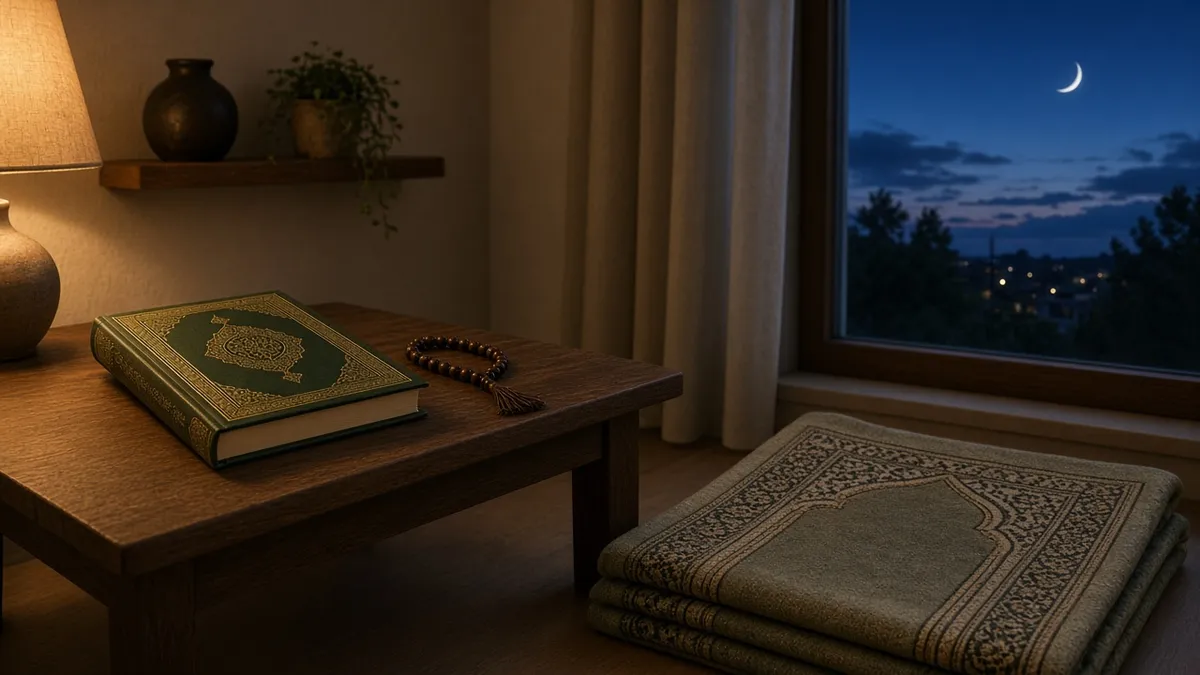
Surah Mulk and Surah Ikhlas both answer the question "who is Allah?", but in very different ways. Surah Al-Ikhlas (112) answers it directly, in four short verses: He is One, the Eternal Refuge, He neither begets nor is born, and nothing is equivalent to Him. Surah Al-Mulk (67) answers it by pointing: to the seven heavens, the birds in flight, the earth made tame and the water we drink. This page compares what the two surahs say, using the Sahih International translation as published on Quran.com.
This is a meaning-and-themes comparison only. It does not discuss virtues, rulings or hadith. For the full text of Surah Mulk, see Surah Mulk in English.
Surah Al-Ikhlas in full
Surah Al-Ikhlas is short enough to quote in full:
"Say, "He is Allāh, [who is] One, Allāh, the Eternal Refuge. He neither begets nor is born, Nor is there to Him any equivalent."" (112:1-4)
The two surahs at a glance
| Surah Al-Mulk | Surah Al-Ikhlas | |
|---|---|---|
| Number | 67 | 112 |
| Name means | The Dominion | Sincerity (or Purity of faith) |
| Verses | 30 | 4 |
| Juz | 29 | 30 |
| Mushaf pages | 562-564 | 604 |
| Classification (Quran.com) | Meccan | Meccan |
| Style | Signs in creation, questions, warnings | A direct statement about Allah |
Two ways of saying the same thing
The simplest way to read these surahs together is this: Al-Ikhlas states, and Al-Mulk shows.
Al-Ikhlas gives four statements about Allah with no examples. Al-Mulk gives example after example, the sky, the earth, the birds, the water, and asks the reader to draw the conclusion. A reader who knows both can move between them: Al-Ikhlas names who Allah is, and Al-Mulk helps the reader see it in the world around them.
Theme 1: "Say"
Al-Ikhlas opens with a command: "Say." The whole surah is something to be declared.
Surah Al-Mulk also uses "Say" again and again in its closing section. Verses 23, 24, 26, 28, 29 and 30 each begin with it in the Sahih International translation, for example:
"Say, "It is He who has produced you and made for you hearing and vision and hearts [i.e., intellect]; little are you grateful."" (67:23)
"Say, "He is the Most Merciful; we have believed in Him, and upon Him we have relied. And you will [come to] know who it is that is in clear error."" (67:29)
Notice how close 67:29, "He is the Most Merciful", is to 112:1, "He is Allāh, [who is] One." Both are short declarations of who He is, given as words to say.
Theme 2: One, and the one in whose hand is dominion
Al-Ikhlas begins with Allah's oneness:
"Say, "He is Allāh, [who is] One," (112:1)
Al-Mulk begins with His dominion:
"Blessed is He in whose hand is dominion, and He is over all things competent -" (67:1)
One way to read these openings together: Al-Ikhlas says there is one God, and Al-Mulk says all dominion is in His hand. The second verse of Al-Mulk adds that He "created death and life to test you [as to] which of you is best in deed" (67:2). The One described in Al-Ikhlas is the one who controls life and death in Al-Mulk. See Surah Mulk verse 1 for more on this opening.
Theme 3: The Eternal Refuge, and who else could help you
Al-Ikhlas calls Allah "the Eternal Refuge" (112:2). Al-Mulk makes the same point through questions about who people can rely on:
"Or who is it that could be an army for you to aid you other than the Most Merciful? The disbelievers are not but in delusion." (67:20)
"Or who is it that could provide for you if He withheld His provision? But they have persisted in insolence and aversion." (67:21)
"Say, "Have you considered: if your water was to become sunken [into the earth], then who could bring you flowing water?"" (67:30)
Each question has the same answer. There is no one else to turn to for help, provision or water. Al-Mulk's closing line about water (see verse 30) is perhaps the most concrete picture of what turning to Him for every need looks like. And 67:29 states the response: "upon Him we have relied."
Theme 4: He neither begets nor is born, and He is the Creator
Al-Ikhlas says:
"He neither begets nor is born," (112:3)
Al-Mulk does not use these words, but it repeatedly describes Allah as the one who creates, and everything else as created:
"[He] who created death and life to test you [as to] which of you is best in deed - and He is the Exalted in Might, the Forgiving -" (67:2)
"[And] who created seven heavens in layers..." (67:3)
"Does He who created not know, while He is the Subtle, the Aware?" (67:14)
"Say, "It is He who has multiplied you throughout the earth, and to Him you will be gathered."" (67:24)
Read side by side, the two surahs draw a clear line between the Creator and the created. Al-Ikhlas states that He was not born and has no offspring; Al-Mulk shows Him as the one who brought death, life, the heavens and people into being.
Theme 5: Nothing equivalent to Him, and no flaw in His creation
Al-Ikhlas ends:
"Nor is there to Him any equivalent." (112:4)
Al-Mulk invites the reader to search creation for a flaw, and promises they will not find one:
"[And] who created seven heavens in layers. You do not see in the creation of the Most Merciful any inconsistency. So return [your] vision [to the sky]; do you see any breaks?" (67:3)
"Then return [your] vision twice again. [Your] vision will return to you humbled while it is fatigued." (67:4)
These verses speak about different things: Al-Ikhlas about Allah Himself, Al-Mulk about His creation. But they share a sense of the incomparable. Nothing is equivalent to Him, and the eye that searches His creation for a break comes back "humbled" and "fatigued." Our verse 3 page explores this passage.
Theme 6: Names and attributes
Al-Ikhlas uses two descriptions in particular: One and the Eternal Refuge. Al-Mulk uses several names of Allah, including:
- The Exalted in Might and the Forgiving (67:2)
- The Most Merciful (67:3, 67:19, 67:20, 67:29)
- The Subtle and the Aware (67:14)
- Knowing of what is within the breasts (67:13)
- Seeing of all things (67:19)
"Do they not see the birds above them with wings outspread and [sometimes] folded in? None holds them [aloft] except the Most Merciful. Indeed He is, of all things, Seeing." (67:19)
The full list and what each name means in context is on our names of Allah in Surah Mulk page.
Theme 7: Knowledge belongs to Allah
Al-Ikhlas is a statement of who Allah is. Al-Mulk adds a note of humility about what people know:
"Say, "The knowledge is only with Allāh, and I am only a clear warner."" (67:26)
"And conceal your speech or publicize it; indeed, He is Knowing of that within the breasts." (67:13)
The surah that describes Allah's dominion over everything also reminds the reader that the full knowledge of it belongs to Him.
Side-by-side table
| Theme | Surah Al-Ikhlas | Surah Al-Mulk |
|---|---|---|
| Declaration | "Say, He is Allāh, [who is] One" (112:1) | "Say, He is the Most Merciful" (67:29) |
| Sovereignty | One (112:1) | In His hand is dominion (67:1) |
| Reliance | The Eternal Refuge (112:2) | Who could aid you, provide for you or bring water? (67:20, 21, 30) |
| Creator and created | Neither begets nor is born (112:3) | Created death, life and seven heavens (67:2-3) |
| Incomparable | No equivalent to Him (112:4) | No inconsistency in His creation (67:3-4) |
| Response | (The surah is the declaration) | "Upon Him we have relied" (67:29) |
Reading the two surahs together
Because Al-Ikhlas is so short, it is often one of the first surahs a person learns. Surah Mulk takes longer to memorize, but many of its verses unpack the same ideas at length. If you know Al-Ikhlas and are learning Surah Mulk, you may find it helpful to notice where each verse of Al-Mulk connects with the four lines of Al-Ikhlas. Our how to memorize Surah Mulk guide and the verse explorer can help with the Mulk side, and the Surah Mulk tafsir page offers more background.
Sources: Quranic text verified against Uthmani script (Hafs an Asim). Hadith cross-referenced with Sunnah.com and Quran.com. See our editorial policy.