
Surah Mulk and Surah Qalam: How the Neighbouring Surahs Connect
They are consecutive Makki surahs at the start of juz 29. Al-Mulk ends by saying the deniers "will come to know who it is that is in clear error" (67:29), and Al-Qalam answers that Allah "is most knowing of who has gone astray" (68:7). Both deal with the warner, denial, provision and the Day of Judgement.
Last reviewed:
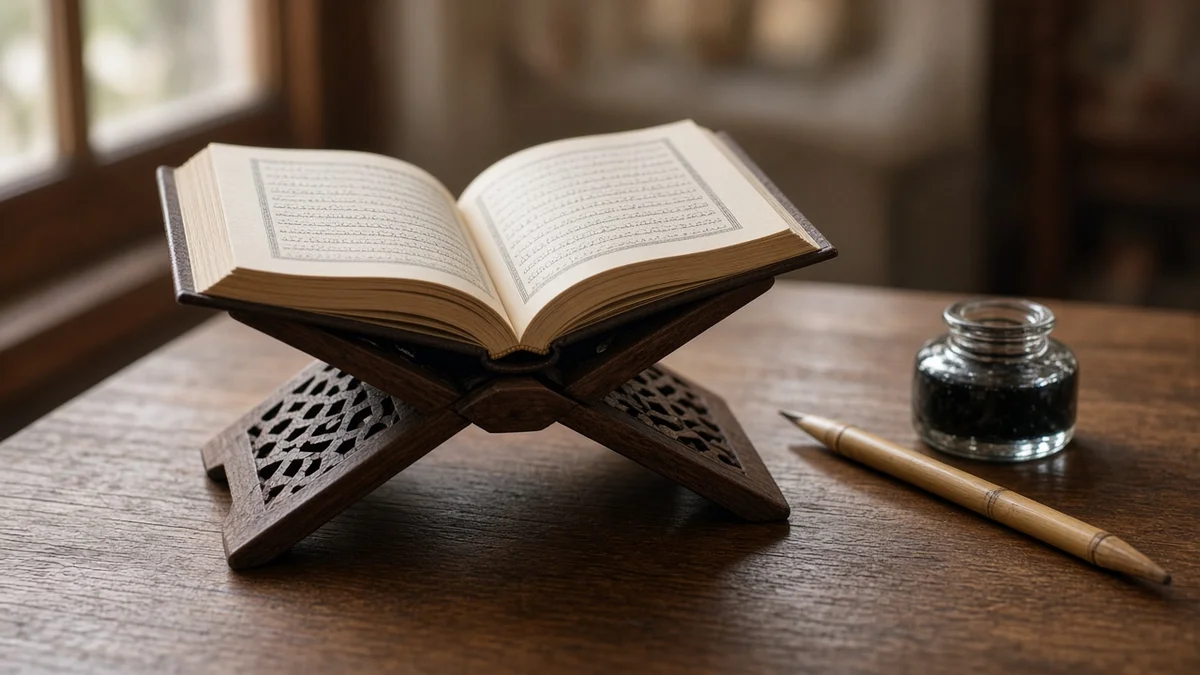
Surah Al-Mulk (chapter 67) and Surah Al-Qalam (chapter 68) sit side by side at the start of the 29th juz. If you recite Surah Mulk regularly, Al-Qalam is literally the next page you turn to, and the two surahs read like a conversation. Al-Mulk ends by asking the deniers who is "in clear error". Al-Qalam begins by telling the Prophet that his Lord knows best "who has gone astray". This guide compares Surah Mulk and Surah Qalam using only the text of the Qur'an: their size and place, their openings, the themes they share, the story of the people of the garden, and a simple plan for studying them together.
All English quotations are from the Sahih International translation as published on Quran.com, with verse numbers so you can check each one.
Surah Mulk and Surah Qalam at a glance
| Surah Al-Mulk | Surah Al-Qalam | |
|---|---|---|
| Chapter number | 67 | 68 |
| Name means | The Dominion / Sovereignty | The Pen |
| Number of verses | 30 | 52 |
| Revelation place (Quran.com) | Makkah | Makkah |
| Juz | 29 (opens the juz) | 29 (second surah) |
| Pages (Madani mushaf, Quran.com) | 562–564 | 564–566 |
| Opening | "Blessed is He in whose hand is dominion" | "Nun. By the pen and what they inscribe" |
Both surahs are complete inside juz 29, which runs from Al-Mulk 67:1 to Al-Mursalat 77:50 and is often called Juz Tabarak after Al-Mulk's first word. Our Juz Tabarak plan covers all eleven surahs of the juz, and which para Surah Mulk is in explains the para numbering. Al-Qalam has 22 more verses than Al-Mulk, but its verses are shorter, so the two take up a similar number of pages. See how long Surah Mulk is for typical reading times.
How each surah opens
Surah Al-Mulk opens with praise of Allah and His power over everything:
"Blessed is He in whose hand is dominion, and He is over all things competent -" (67:1)
Surah Al-Qalam opens with a single letter and an oath:
"Nūn. By the pen and what they inscribe," (68:1)
It then turns straight to the Prophet:
"You are not, [O Muḥammad], by the favor of your Lord, a madman. And indeed, for you is a reward uninterrupted. And indeed, you are of a great moral character." (68:2–4)
The two openings face in different directions. Al-Mulk begins by looking up, at the One who owns all dominion. Al-Qalam begins by looking at the Messenger who carries the message about that dominion, and defends him against the insult of his critics. Read in order, the reader moves from the King to the King's messenger.
The seam between the two surahs
The most striking link is where one surah ends and the next begins. Near the end of Al-Mulk, the Prophet is told to say:
"Say, "He is the Most Merciful; we have believed in Him, and upon Him we have relied. And you will [come to] know who it is that is in clear error."" (67:29)
A few lines later, Al-Qalam answers that very question:
"Indeed, your Lord is most knowing of who has gone astray from His way, and He is most knowing of the [rightly] guided." (68:7)
"Clear error" and "gone astray" come from the same Arabic root (ḍ-l-l). Al-Mulk leaves the question open, "you will come to know", and Al-Qalam settles it: Allah already knows. This is a good place to pause when you recite the two together.
Al-Mulk's final verse then closes with a question about water:
"Say, "Have you considered: if your water was to become sunken [into the earth], then who could bring you flowing water?"" (67:30)
And Al-Qalam's central story is about a crop that was lost overnight. One surah asks who could restore your water; the next shows people who woke up to find their harvest gone.
Shared theme 1: the warner and those who deny him
Al-Mulk describes the people of the Fire being questioned by its keepers:
"Every time a company is thrown into it, its keepers ask them, "Did there not come to you a warner?"" (67:8)
"They will say, "Yes, a warner had come to us, but we denied and said, 'Allāh has not sent down anything. You are not but in great error.'"" (67:9)
Al-Qalam shows the same denial happening in this life. The deniers call the Prophet mad (68:2, 68:51), dismiss the verses as "legends of the former peoples" (68:15), and hope he will soften his message (68:9). He is told plainly:
"Then do not obey the deniers." (68:8)
So Al-Mulk shows the regret at the end, and Al-Qalam shows the choices that lead to it. Our article on lessons from Surah Mulk reflects further on verses 8–11.
Shared theme 2: provision, wealth and the earth
Al-Mulk reminds the reader that every meal comes from Allah:
"It is He who made the earth tame for you - so walk among its slopes and eat of His provision - and to Him is the resurrection." (67:15)
Al-Qalam warns against a man who thinks wealth gives him status:
"Because he is a possessor of wealth and children," (68:14)
Then it tells the story of people who treated their harvest as theirs alone. Both surahs make the same point from two sides: provision is a gift, and how we treat it is part of the test.
The people of the garden in Surah Qalam
The story of the companions of the garden (68:17–33) is the heart of Surah Al-Qalam and has no parallel narrative in Al-Mulk, which makes it the best part of the pairing to study closely.
"Indeed, We have tried them as We tried the companions of the garden, when they swore to cut its fruit in the [early] morning Without making exception." (68:17–18)
They planned to harvest early, quietly, so that no poor person could ask for a share (68:23–24). But during the night:
"So there came upon it [i.e., the garden] an affliction from your Lord while they were asleep. And it became as though reaped." (68:19–20)
When they saw it, they first thought they were lost, then understood what had happened:
"But when they saw it, they said, "Indeed, we are lost; Rather, we have been deprived."" (68:26–27)
"The most moderate of them said, "Did I not say to you, 'Why do you not exalt [Allāh]?'"" (68:28)
"They said, "Exalted is our Lord! Indeed, we were wrongdoers."" (68:29)
Here is a lovely contrast with Al-Mulk. In Al-Mulk 67:10–11 the people of the Blaze admit their sin when it is too late. In Al-Qalam the garden owners admit their wrong while they are still alive and turn back to their Lord (68:32). The lesson is in the timing: regret in this world can lead somewhere; regret in the Hereafter cannot.
The surah then draws the conclusion:
"Such is the punishment [of this world]. And the punishment of the Hereafter is greater, if they only knew." (68:33)
"Indeed, for the righteous with their Lord are the Gardens of Pleasure." (68:34)
The ruined earthly garden is set against the lasting gardens of the righteous.
Shared theme 3: the Day of accountability
Both surahs look ahead to the Day of Judgement. Al-Mulk says the knowledge of its timing belongs only to Allah (67:26) and describes the faces of the deniers when they see it approaching (67:27). Al-Qalam gives a vivid scene from that Day:
"The Day the shin will be uncovered and they are invited to prostration but they [i.e., the disbelievers] will not be able," (68:42)
The next verse explains why: "they used to be invited to prostration while they were sound" (68:43). Both surahs stress that the time to respond is now.
Differences worth noticing
- Focus. Al-Mulk centres on Allah's sovereignty and the signs of creation: the layered heavens (67:3), the birds held aloft (67:19), the earth made tame (67:15). Al-Qalam centres on the Prophet, his character, and the people who opposed him.
- Story. Al-Mulk has no extended story. Al-Qalam contains the garden owners and a brief reference to Prophet Yunus (68:48–50), told as a lesson in patience.
- Ending. Al-Mulk ends on water and dependence (67:30). Al-Qalam ends on the Qur'an itself: "But it is not except a reminder to the worlds." (68:52)
Reading Surah Mulk and Surah Qalam together
Because the surahs are consecutive, reading them together is easy: once you finish 67:30, simply carry on to 68:1. A few practical tips:
- Read the seam aloud. Recite 67:28–30 and then 68:1–7 in one sitting and listen for the "error / gone astray" link.
- Compare the two regrets. Put 67:10–11 next to 68:26–32 and write one line on the difference.
- Use a translation you can check. Read the Arabic with the Sahih International English on Quran.com, or use our read Surah Mulk online page for Al-Mulk.
- Memorise in order. If you have memorised Al-Mulk, Al-Qalam is the natural next step in juz 29. Our memorization wizard can help you keep Al-Mulk fresh while you add the new surah.
A one-week study plan for both surahs
| Day | Surah Al-Mulk | Surah Al-Qalam |
|---|---|---|
| 1 | Verses 1–5 (creation and the heavens) | Verses 1–7 (the pen and the Prophet) |
| 2 | Verses 6–11 (the warner and regret) | Verses 8–16 (the deniers) |
| 3 | Verses 12–18 (knowledge and security) | Verses 17–25 (the garden plan) |
| 4 | Verses 19–24 (birds, provision, guidance) | Verses 26–33 (the garden lost and the repentance) |
| 5 | Verses 25–30 (the promise and the water) | Verses 34–43 (questions and the Day) |
| 6 | Read in full | Verses 44–52 (patience and Yunus) |
| 7 | Read in full | Read in full |
You may also like our comparison of Surah Mulk and Ayatul Kursi.
A note on sources
This page quotes only the Qur'an, in the Sahih International translation on Quran.com. It does not quote hadith or make claims about special rewards for reading either surah. Chapter facts (verse counts, revelation place, pages) come from Quran.com's chapter data. For questions of religious practice, consult a qualified scholar you trust.
Sources: Quranic text verified against Uthmani script (Hafs an Asim). Hadith cross-referenced with Sunnah.com and Quran.com. See our editorial policy.