
Surah Mulk and Ayatul Kursi: Two Passages on Allah's Dominion
Both describe Allah's dominion over the heavens and the earth, His complete knowledge, His constant care for creation, and the fact that no one helps or provides except Him. Ayat al-Kursi says it in one verse (2:255), and Surah Al-Mulk develops it over 30 verses.
Last reviewed:
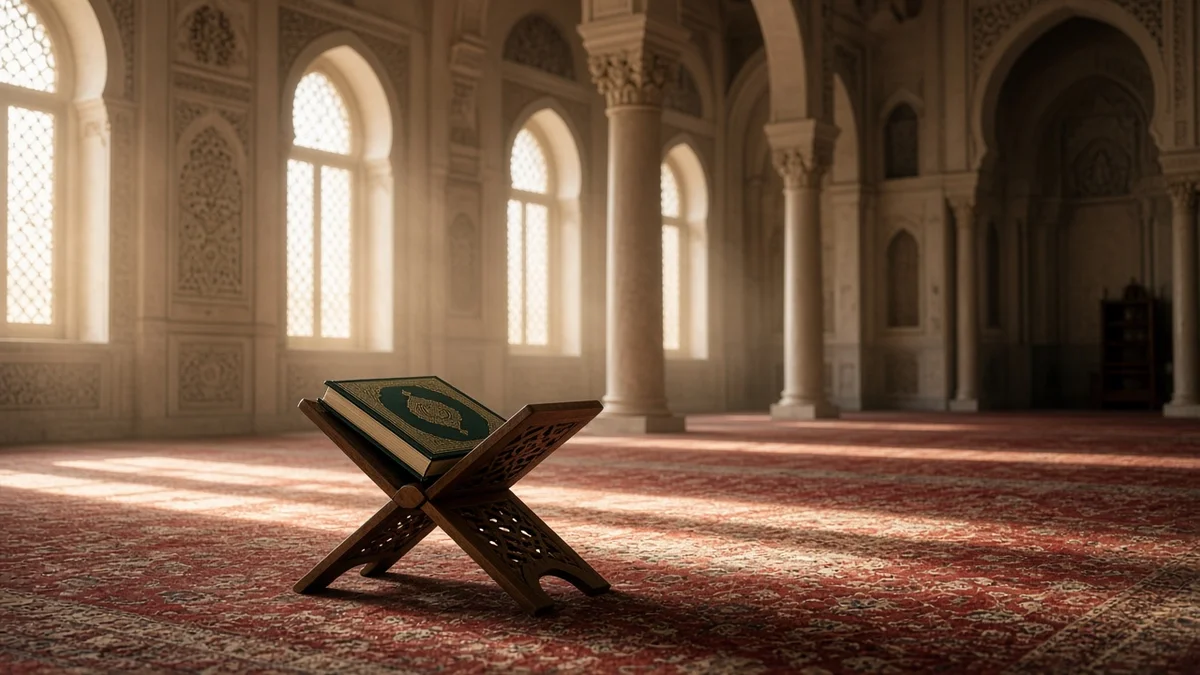
Surah Al-Mulk and Ayat al-Kursi (often written Ayatul Kursi) are two of the passages Muslims know best. Ayat al-Kursi is a single verse, Al-Baqarah 2:255. Surah Al-Mulk is a whole chapter of 30 verses. Yet they speak about the same subject in remarkably similar language: Allah owns everything in the heavens and the earth, He knows everything, and nothing in creation tires Him or escapes Him. This guide compares Surah Mulk and Ayatul Kursi phrase by phrase, using only the text of the Qur'an, so you can recite both with more understanding.
All English quotations are from the Sahih International translation as published on Quran.com, with verse numbers so you can check each one. This page focuses on meaning and themes. It does not discuss rewards or rulings.
Surah Mulk and Ayatul Kursi at a glance
| Surah Al-Mulk | Ayat al-Kursi | |
|---|---|---|
| Reference | Chapter 67, verses 1–30 | Chapter 2 (Al-Baqarah), verse 255 |
| Length | 30 verses | 1 verse |
| Revelation place of the surah (Quran.com) | Makkah | Madinah (Al-Baqarah) |
| Juz | 29 | 3 |
| Page (Madani mushaf, Quran.com) | 562–564 | 42 |
| Opening words | "Blessed is He in whose hand is dominion" | "Allāh - there is no deity except Him" |
| Central image | dominion (al-mulk) in His hand | His Kursi extending over the heavens and the earth |
Ayat al-Kursi takes its name from the word Kursī in the verse. Surah Al-Mulk takes its name from al-mulk, "dominion", in its first verse. Both names point to Allah's authority over all creation. If you are new to Surah Mulk, our page on how long Surah Mulk is explains its size and reading time.
The full text of Ayat al-Kursi
Here is the whole verse in Sahih International:
"Allāh - there is no deity except Him, the Ever-Living, the Self-Sustaining. Neither drowsiness overtakes Him nor sleep. To Him belongs whatever is in the heavens and whatever is on the earth. Who is it that can intercede with Him except by His permission? He knows what is [presently] before them and what will be after them, and they encompass not a thing of His knowledge except for what He wills. His Kursī extends over the heavens and the earth, and their preservation tires Him not. And He is the Most High, the Most Great." (2:255)
It can be read as a series of short statements. Below, each is set beside the verses of Surah Al-Mulk that echo it.
Theme 1: dominion over the heavens and the earth
Ayat al-Kursi says: "To Him belongs whatever is in the heavens and whatever is on the earth" and "His Kursī extends over the heavens and the earth."
Surah Al-Mulk opens with the same truth:
"Blessed is He in whose hand is dominion, and He is over all things competent -" (67:1)
And it shows that dominion at work in the sky:
"[And] who created seven heavens in layers. You do not see in the creation of the Most Merciful any inconsistency. So return [your] vision [to the sky]; do you see any breaks?" (67:3)
Ayat al-Kursi states the fact; Surah Al-Mulk invites you to go outside and look. Reading them together turns a statement of belief into something you can reflect on every time you see the night sky.
Theme 2: the Ever-Living who never tires
Ayat al-Kursi describes Allah as "the Ever-Living, the Self-Sustaining" and says "Neither drowsiness overtakes Him nor sleep" and "their preservation tires Him not."
Surah Al-Mulk gives a picture of that sustaining care:
"Do they not see the birds above them with wings outspread and [sometimes] folded in? None holds them [aloft] except the Most Merciful. Indeed He is, of all things, Seeing." (67:19)
Every bird in the air, at every moment, is held by Him. Ayat al-Kursi says the heavens and the earth do not tire Him; Al-Mulk shows a small, visible example of the same constant care. Our list of the names of Allah in Surah Mulk shows how often "the Most Merciful" appears in these verses.
Theme 3: complete knowledge
Ayat al-Kursi says: "He knows what is [presently] before them and what will be after them, and they encompass not a thing of His knowledge except for what He wills."
Surah Al-Mulk makes the same point twice in a row:
"And conceal your speech or publicize it; indeed, He is Knowing of that within the breasts." (67:13)
"Does He who created not know, while He is the Subtle, the Aware?" (67:14)
Al-Mulk 67:14 is a short argument: the One who created you must know you. Ayat al-Kursi adds the other side: we know only what He allows us to know. Together they teach both humility and comfort. Nothing we hide is hidden from Him, and nothing we need is unknown to Him.
Theme 4: no one acts except by His permission
Ayat al-Kursi asks: "Who is it that can intercede with Him except by His permission?"
Surah Al-Mulk asks questions in the same form:
"Or who is it that could be an army for you to aid you other than the Most Merciful? The disbelievers are not but in delusion." (67:20)
"Or who is it that could provide for you if He withheld His provision? But they have persisted in insolence and aversion." (67:21)
The structure is the same, "Who is it that...?", and the answer is the same: no one, except Him or by His leave. Al-Mulk ends with the most memorable question of this kind, about water (67:30). These rhetorical questions are a good way to remember both passages, because each one asks the reader to find an answer and discover there is none except Allah.
Theme 5: the Most High, the Most Great
Ayat al-Kursi closes: "And He is the Most High, the Most Great." Surah Al-Mulk twice refers to Allah as "He who is above":
"Do you feel secure that He who is above would not cause the earth to swallow you and suddenly it would sway?" (67:16)
Both passages end their description of Allah by lifting the reader's eyes upward, and both draw a practical conclusion: if He is above all and owns all, we should rely on Him. Al-Mulk says it in words the Prophet is told to repeat:
"Say, "He is the Most Merciful; we have believed in Him, and upon Him we have relied."" (67:29)
A phrase-by-phrase comparison table
| Ayat al-Kursi (2:255) | Echo in Surah Al-Mulk |
|---|---|
| "there is no deity except Him" | "who is it that could be an army for you ... other than the Most Merciful?" (67:20) |
| "the Ever-Living, the Self-Sustaining" | "None holds them [aloft] except the Most Merciful" (67:19) |
| "To Him belongs whatever is in the heavens and ... the earth" | "Blessed is He in whose hand is dominion" (67:1) |
| "He knows what is ... before them and ... after them" | "He is Knowing of that within the breasts" (67:13) |
| "His Kursī extends over the heavens and the earth" | "seven heavens in layers" (67:3) |
| "their preservation tires Him not" | "who could provide for you if He withheld His provision?" (67:21) |
| "the Most High, the Most Great" | "He who is above" (67:16–17) |
Differences worth noticing
- Length and form. Ayat al-Kursi compresses its whole message into one verse. Surah Al-Mulk spreads it across 30 verses and adds scenes of the Hereafter (67:6–11), warnings (67:16–18) and a closing dialogue (67:25–30).
- Context. Ayat al-Kursi sits in a Madani surah, in a passage about faith and conduct; the next verse begins, "There shall be no compulsion in [acceptance of] the religion" (2:256). Surah Al-Mulk is Makki and addresses people who doubted the resurrection.
- Voice. Ayat al-Kursi is a description of Allah from start to finish. Surah Al-Mulk keeps turning to the listener with questions: "do you see any breaks?", "Do you feel secure?", "Have you considered?"
- Purpose of life. Al-Mulk adds a theme Ayat al-Kursi does not state directly: that death and life were created "to test you [as to] which of you is best in deed" (67:2).
Reflecting on both passages in your routine
Many Muslims already recite both passages, often at night. Whatever your routine, a few simple habits can make the recitation more meaningful:
- Learn the meaning line by line. Use the comparison table above and say the English of each phrase once before reciting the Arabic.
- Pause on the questions. When you reach the "Who is it that...?" questions in 67:20–21 and 67:30, recall the matching line of Ayat al-Kursi.
- Look up. Al-Mulk 67:3–4 asks you to look at the sky twice. On a clear night, do it, and think of the Kursi extending over the heavens.
- Check the text. Read both passages on Quran.com, or use our read Surah Mulk online page with Arabic, transliteration and translation.
- Go deeper. Our article on lessons from Surah Mulk draws out more practical reflections from its verses.
For questions about which passages to recite, when, and how, consult a qualified scholar you trust. This page does not give religious rulings.
You may also like Surah Mulk and Surah Ikhlas compared.
A note on sources
This page quotes only the Qur'an, in the Sahih International translation on Quran.com. It does not quote hadith or make claims about rewards for reciting either passage. Facts about verse numbers, juz and pages come from Quran.com's chapter and verse data.
Sources: Quranic text verified against Uthmani script (Hafs an Asim). Hadith cross-referenced with Sunnah.com and Quran.com. See our editorial policy.